PRACTICAL COOKING & KITCHEN CRAFT · LEVEL 1 · LESSON 1
The Clean Counter Challenge: Build a Yogurt Crunch Cup
Can you make a crunchy snack while every tool moves in one clear direction?
Your mission
Set up three kitchen zones, make one yogurt crunch cup, explain one station change, and reset the kitchen.
Expected result
One yogurt crunch cup, one station change you can explain, and a clean kitchen.
Estimated time
Plan about 25–30 minutes. Record the actual time because this estimate is untested.
What you need
- plain yogurt, banana, berries, and ready-to-eat crunch
- ½-cup measure, ¼-cup measure, tablespoon, and clean food-safe scraper
- small bowl, assembly spoon, and at least two tasting spoons
- three zone labels, clean leveling plate, used-tool plate, soap, and clean towels
Make your snack
Set the station
- Wash your hands with soap and running water for at least 20 seconds. Dry them.
- Label three zones: clean tools, food, and used tools.
- Keep the path to the refrigerator clear.
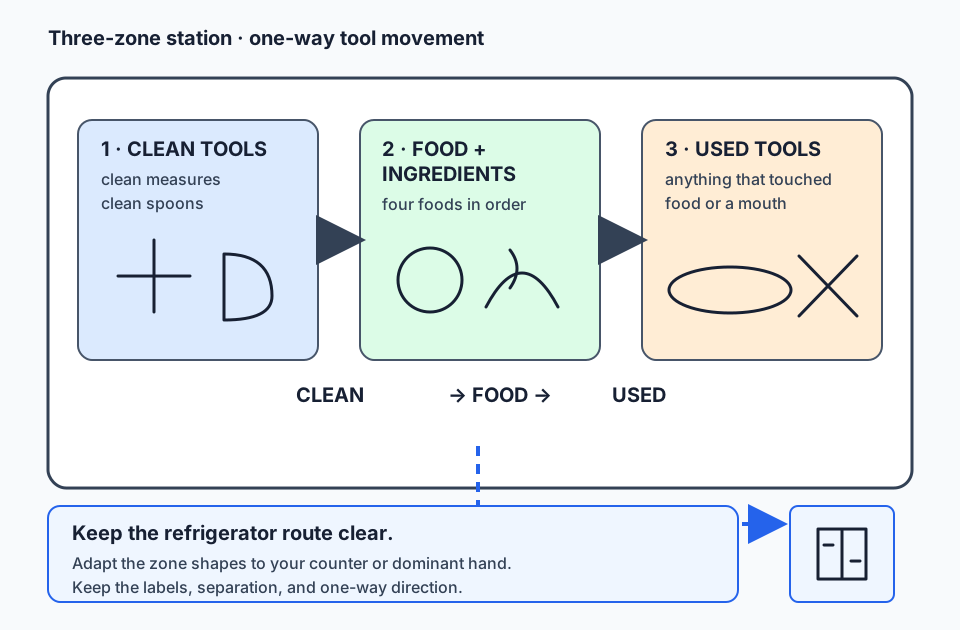
1 · Clean tools
Start with clean measures, spoons, and scraper.
2 · Food
Keep the four foods in recipe order.
3 · Used tools
Anything that touched food or a mouth stays here.
Clear route
Keep a separate path open to the refrigerator.
Test and adapt
- With no food open, move one spoon from clean tools to food to used tools.
- Move one zone to fit your counter or the hand you use most.
- Say why your change may help.
Check the food
- Match the yogurt, banana, berries, and crunch to the list.
- Wash the berries under running water unless the package says prewashed or ready-to-eat. Dry them.
- Put the foods in this order: yogurt, banana, berries, crunch.
Make the cup
- Measure ½ cup yogurt. Put it in the bowl. Move the measure and assembly spoon to used tools.
- Add ½ banana.
- Measure and add ¼ cup dry berries. Move the berry measure to used tools, away from the crunch.
- Over the clean plate, fill the tablespoon with crunch. Sweep the clean food-safe scraper across the rim.
- Add the level spoonful. Repeat once for 2 level tablespoons total.
- Leave extra crunch on the plate. Move the tablespoon and scraper to used tools.
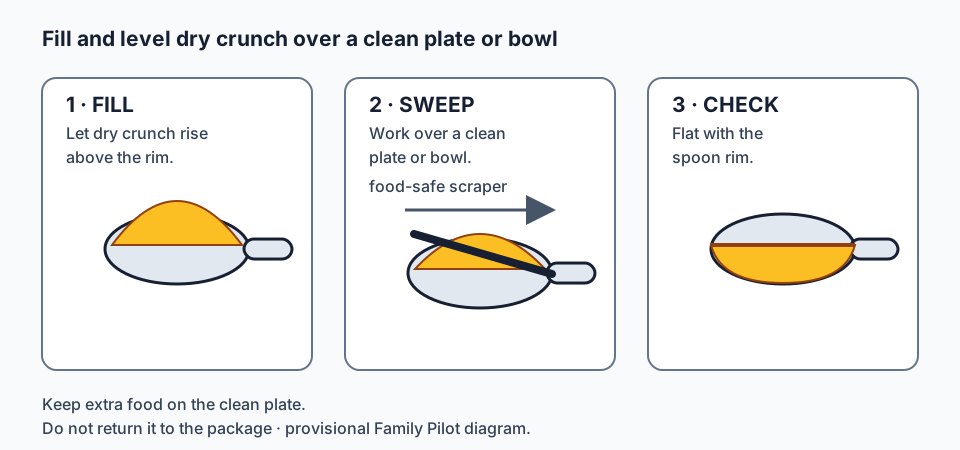
1 · Fill
Let dry crunch rise above the spoon rim.
2 · Sweep
Over a clean plate, sweep the food-safe scraper across the rim.
3 · Check
The crunch should be flat with the spoon rim.
Taste and decide
- Taste once with a clean spoon. Move that spoon to used tools.
- Say what you liked.
- Did your zone change help? Say what you would keep or change next time.
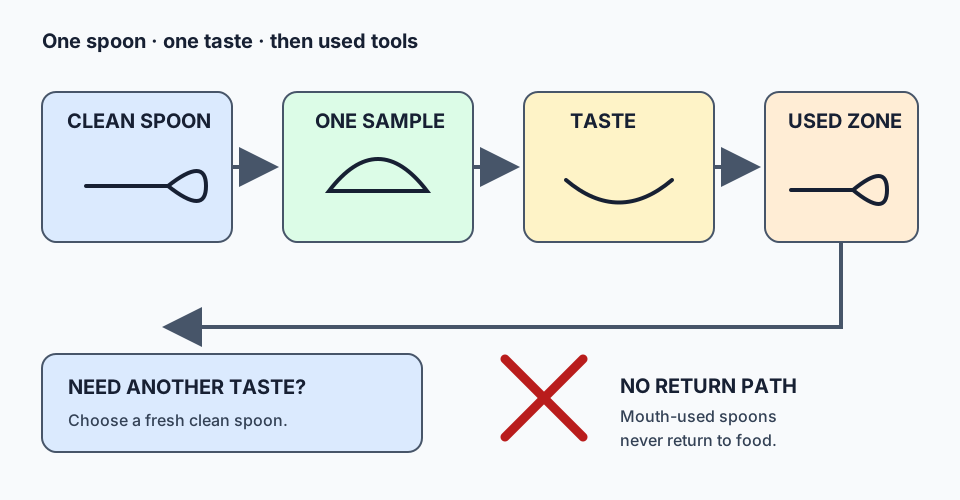
Clean spoon
Begin every taste with a fresh clean spoon.
One sample
Take one sample from the food.
Taste
The spoon goes to your mouth once.
Used tools
The spoon never returns to food.
Reset the kitchen
- Eat the cup now, or cover, label, and refrigerate it promptly.
- Return yogurt and unused fruit to the refrigerator.
- Wash the tools with warm, soapy water.
- Wipe the counter, clear the sink and refrigerator path, and wash your hands.
- One yogurt crunch cup
- Clean and used tools kept apart
- One station change and reason
- Kitchen reset
What changed?
Mise en place means “put everything in place before you start.” Your three zones helped each tool move one way: clean tools → food → used tools.
Your station change was useful if it made that clean-to-used direction easier to follow.
Try cinnamon — optional
After the first taste, add no more than ⅛ teaspoon cinnamon, move that measure to used tools, and use a second clean spoon. Say which version you prefer.
Help if stuck
Open simple help
- A clean tool entered used tools: leave it there and use another clean tool.
- The amount looks wrong: check the measure size and whether the tablespoon was level.
- The berries are wet: dry them before measuring so water does not enter the cup or crunch package.
What’s next
Next: Use the same clean-to-used station while you measure a refrigerator-oats recipe.
Return to Level 1: Kitchen Foundations
Parent session
Complete before the learner starts · setup, responsibilities, and resources
At a glance
- Readiness: Approximately age 10+, readiness-based. The learner must follow a short sequence, wait to taste, and stop immediately.
- Pilot time: 5–10 minutes of adult setup and 25–30 learner minutes. Record actual time; neither estimate is validated.
- Learner owns: handwashing, station setup and adaptation, supervised berry washing, measuring, fixed-order assembly, tasting description, station evaluation, dishwashing, and reset.
- Adult owns: labels, allergens, cross-contact, food condition, cold holding, ingredient approval, all cutting, station approval, sink-water temperature, storage decisions, substitutions, and intervention.
Ingredients
Plain yogurt
½ cup
Pasteurized, cold, and within date.
Banana
½ medium banana
Cut or separated by the adult before the learner begins.
Approved berries
¼ cup
Intact, approved, and washed and dried when required.
Ready-to-eat crunch
2 level tablespoons
Set out the selected cereal or crunch ingredient.
Major-allergen note: Dairy yogurt contains milk. Oats or cereal may contain wheat. Plant yogurt may contain soy or tree nuts. Read the actual labels and follow household allergy and cross-contact requirements.
Tools
Measure
- ½-cup measure for yogurt
- ¼-cup measure for berries
- tablespoon for dry crunch
- clean food-safe scraper for leveling dry ingredients
- ⅛-teaspoon measure only for optional cinnamon
Build and taste
- small bowl or sturdy cup
- assembly spoon
- at least two clean tasting spoons
- parent-only knife and stable cutting board when needed
Organize and clean
- three zone labels
- used-tool plate or bowl
- clean plate or bowl for leveling crunch
- soap, clean towels, and refrigerator access
Before the activity
- Review every label and the household's allergy, dietary, and cross-contact needs. Approve the exact four foods; do not present the learner with an ambiguous substitution.
- Verify that yogurt and berries stayed at 40°F / 4°C or below and are within date and in good condition.
- Choose intact approved berries. Decide whether washing is required. Prepare the banana and remove the knife before the learner begins.
- Check every named measure, the food-safe scraper, towels, work surface, refrigerator route, dishwashing path, and safe sink-water temperature.
- Keep food closed until the learner adapts the three-zone station and you approve it.
Alternate units
The unvalidated metric-volume equivalents are 120 mL yogurt, 60 mL berries, and 30 mL crunch. Use one measurement system for the whole preparation.
During and after
Supervise berry washing and verify the station before food opens. Make all allergen, cross-contact, questionable-food, storage, discard, and substitution decisions. Step in immediately if the learner cannot stop, a used tool returns toward food, or any food or tool history is unclear. Set a safe sink-water temperature; the learner may wash and reset the station.
Adult safety and lesson resources
Assessment
The Lesson is complete when the learner makes the cup safely or stops appropriately, keeps clean and used tools apart, measures with the named tools, explains one station change, and resets the kitchen. Record parent help honestly; preparation completed in the parent session is not learner cutting evidence.
Safety sources and validation notes
Safety sources rechecked September 2, 2026: CDC handwashing guidance, FoodSafety.gov Clean, Separate, Cook, Chill, FDA major-allergen guidance, and FDA produce-safety guidance.
The rewritten learner path, timing, ingredient behavior, station workflow, diagrams, printable/device paths, and family comprehension remain unvalidated. Please report an unclear instruction or pilot result without a child's name, face, or private information.
Family Pilot — not yet validated: What has not been validated yet
Version 0.3.1 · desk and safety review September 2, 2026
This page is available early for family testing. The activity has not yet been completed to prove every instruction, value, timing estimate, visual, or accommodation.
- The rewritten direct learner activity, first-action placement, 25–30 minute learner estimate, 5–10 minute parent-session estimate, and reading load have not yet been tested by a family or target-age learner.
- The exact ingredient quantities, finished yield, brand differences, scraper technique, three-zone workflow, station adaptation, tasting routine, and cleanup remain unvalidated by a family.
- The diagrams, mobile instruction cards, printable path, device rule, produce-washing directions, and accessibility options have not been followed in an actual family kitchen.